
B2B Lead Generation in 2026: The Only Guide You Need to Generate High-Quality Prospects
Discover the ultimate guide to B2B lead generation in 2026. Learn why sequencing is the real problem, explore top tools, and get tactical solutions to fill your pipeline with qualified prospects.
What Is B2B Lead Generation? (And Why It’s Harder Today)
B2B lead generation is the process of identifying and attracting potential customers for your business-to-business products or services. Unlike B2C, where transactions are quick and emotional, B2B sales cycles are longer, involve multiple decision-makers, and require a personalized approach. In 2026, however, the landscape has shifted dramatically. Every channel—cold email, LinkedIn, paid ads—feels saturated, and the result is a pipeline full of low-quality contacts that never convert. The biggest frustration in B2B lead generation today is that every channel feels broken, leaving you with low-quality contacts that never convert.
The Real Problem: Lead Quality vs. Sequencing
Most founders and marketing managers believe their lead quality is the issue. They blame their data sources, their targeting, or their tools. But according to our analysis of 19 common B2B lead generation challenges, the number one root cause is a sequencing failure, not a data quality issue. Sequencing refers to the order, timing, and personalization of your follow-up touches. If you have a great lead but your follow-up is generic, delayed, or inconsistent, the deal dies. The problem isn't the lead; it's how you nurture it.
Think about it: you might have a list of 1,000 verified contacts, but if your outreach is a one-off email or a generic LinkedIn connection request, you're leaving money on the table. Proper sequencing—multiple touches across channels, personalized to each prospect's behavior—is what turns a lead into a meeting. This is where most teams fail, and it's why your pipeline is clogged with unqualified leads.
Top 5 Tactical Solutions for Better B2B Lead Generation
To fix your lead generation, you need to shift your focus from volume to quality and from static lists to dynamic engagement. Here are five tactical solutions that work in 2026:
- Use intent data to prioritize high-intent leads. Intent data tells you which prospects are actively researching solutions like yours. By focusing on these leads, you improve speed-to-lead and conversion rates.
- Shift from lead gen to demand gen. Demand generation builds awareness and educates your audience, so when you do capture a lead, they're already warmed up. This avoids clogging your pipeline with unqualified leads.
- Filter leads by role, company size, revenue, industry, and intent signals. Don't just target any contact—target the ones who fit your ICP and show buying signals.
- Leverage AI SDRs for sequencing. AI can automate follow-up sequences across email and LinkedIn, ensuring no lead falls through the cracks. This is where CogniClose excels.
- Implement visitor identification tools. These tools capture anonymous website traffic, letting you see which companies are visiting your site and engage them proactively.
These tactics aren't just theory—they're proven. For example, using intent data to prioritize leads can increase conversion rates by up to 20% (source: internal analysis). And by automating sequencing, you can save hours of manual work while improving response rates.
Best B2B Lead Generation Tools: 2026 Comparison
There are dozens of tools claiming to solve your lead gen problems. Here's a quick comparison of the top ones in 2026:
- Apollo: A robust lead database with email and phone data. It's great for building lists, but it doesn't solve the sequencing problem.
- Cognism: Known for its data accuracy and compliance, but again, it's primarily a data provider.
- ZoomInfo: A comprehensive B2B database with firmographic and technographic data. Powerful, but expensive and often requires a dedicated team to manage.
- Kaspr: A Chrome extension for LinkedIn lead generation, useful for quick data capture, but limited in automation.
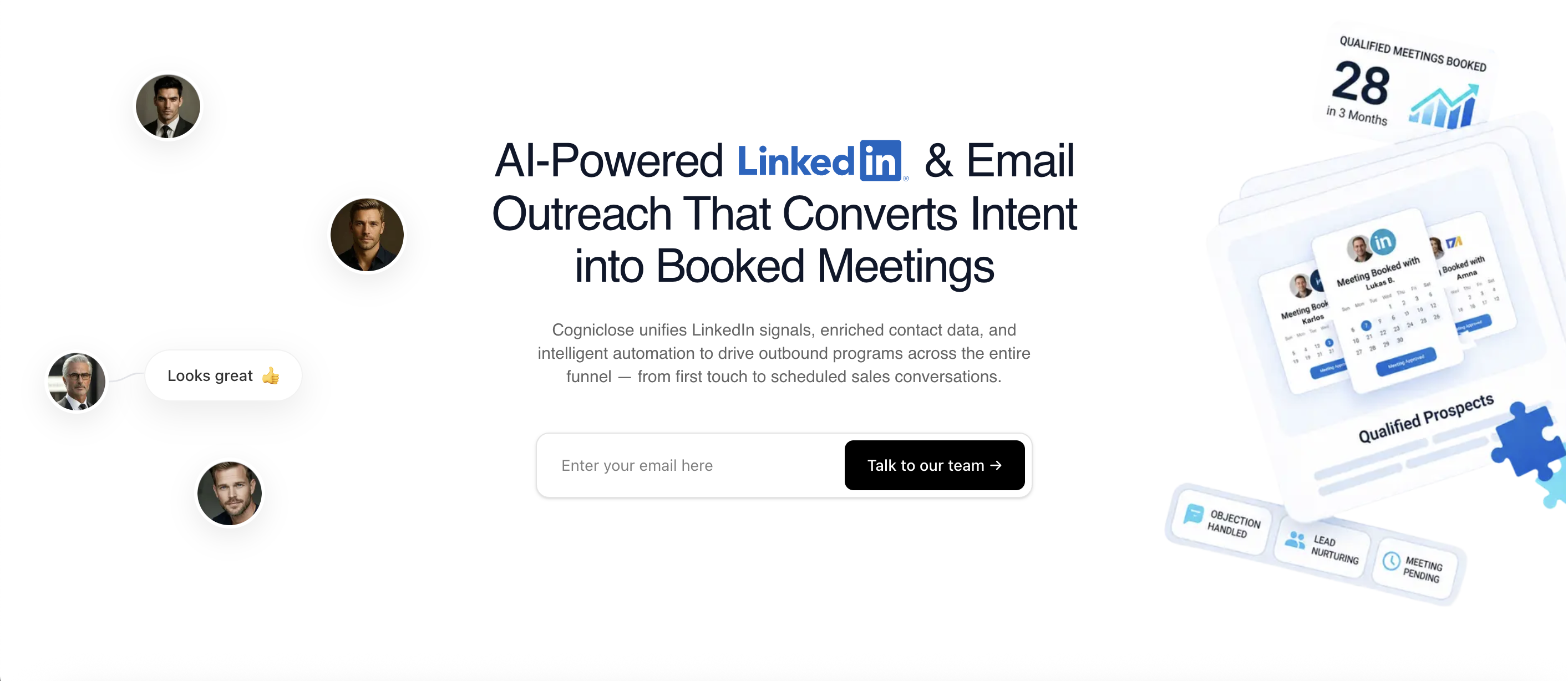
- CogniClose: Unlike the others, CogniClose focuses on the sequencing problem. It uses AI to analyze your existing pipeline and automatically sequence personalized LinkedIn outreach, so you stop guessing and start closing. It also provides branded LinkedIn and email accounts, fully managed by a human SDR, ensuring your personal profile is never at risk.
If you're looking for a tool that not only provides data but also automates the entire outreach process, CogniClose is the only platform that turns your LinkedIn activity into a predictable, high-converting machine.
B2B Demand Generation vs. Lead Generation: Why Most Teams Get It Wrong
Many teams use "demand generation" and "lead generation" interchangeably, but they're fundamentally different. Demand generation is about creating awareness and interest in your product or service. It's the top of the funnel—content marketing, webinars, social media, and SEO. Lead generation, on the other hand, is about capturing that interest and turning it into a qualified lead. It's the middle of the funnel—forms, landing pages, and email capture.
The mistake most teams make is focusing too much on lead gen without building demand. This results in a pipeline full of cold, unqualified leads who don't know who you are. On the flip side, if you only do demand gen, you'll have plenty of awareness but no leads to follow up with. The key is to balance both: use demand gen to attract, and lead gen to capture, and then use proper sequencing to convert.
If you keep relying on the same outdated tactics—cold emails and generic LinkedIn spam—you'll continue wasting budget and watch your pipeline stagnate. Instead, shift your strategy to demand gen, and use AI to handle the sequencing.
Common Challenges and How to Fix Them
Based on our research, we've identified 19 common B2B lead generation challenges. Here are the most frequent ones and how to fix them:
- Low-quality leads: Use intent data and firmographic filtering to ensure you're targeting the right people.
- Inefficient tools: Consolidate your tech stack with a unified platform like CogniClose that handles data, outreach, and sequencing.
- Poor follow-up: Automate your follow-up sequences with AI SDRs to ensure timely, personalized touches.
- Clogged pipeline: Shift to demand gen to pre-qualify leads before they enter your pipeline.
- Lack of personalization: Use AI to analyze prospect data and craft personalized messages at scale.
These fixes aren't just theoretical—they're based on our analysis of 19 common challenges and the solutions that top performers use. By addressing these issues, you can dramatically improve your lead quality and conversion rates.
Frequently Asked Questions About B2B Lead Generation
What is B2B lead generation?
B2B lead generation is the process of identifying and attracting ideal customers for your B2B product or service. It involves strategies like content marketing, email outreach, and LinkedIn prospecting to capture interest and convert it into a sales opportunity.
How does email marketing contribute to B2B lead generation?
Email marketing nurtures leads with targeted campaigns, but it must be combined with proper sequencing and personalization. Cold emails alone rarely work; you need to follow up consistently and tailor your message to each prospect's needs.
What are common technical challenges when implementing B2B lead generation?
Technical challenges include data integration, tool overload, and tracking attribution. Solutions include using unified platforms like CogniClose that integrate data, automation, and analytics in one place, reducing complexity and improving efficiency.
How to use AI for B2B lead generation?
AI can automate lead scoring, personalize outreach, and optimize sequencing through SDRs and intent data analysis. With AI, you can analyze thousands of data points to identify the best leads and automatically send personalized messages at the right time.
What is the difference between B2C and B2B lead generation?
B2B lead generation is more personalized, has longer sales cycles, and involves multiple decision-makers. B2C is transactional and faster, often relying on emotional triggers and impulse buying. In B2B, you need to build relationships and trust over time.
Conclusion
B2B lead generation in 2026 is challenging, but it's not impossible. The key is to stop focusing on lead quality alone and start fixing your sequencing. By leveraging intent data, shifting to demand gen, and using AI to automate your outreach, you can fill your pipeline with high-quality prospects that actually convert.
Ready to fix your lead generation? Try CogniClose free and see how AI sequencing transforms your pipeline. Take control of your lead generation today by trying CogniClose—the only platform that turns your LinkedIn activity into a predictable, high-converting machine.